
Heat exchangers play a critical role in various industries, enabling efficient heat transfer between two fluids. Among the different types of heat exchangers, the shell-and-tube heat exchanger stands out as a reliable and widely used solution. In this blog post, we will delve into the world of shell-and-tube heat exchangers, exploring their working principles, applications, advantages, and considerations.
Understanding Shell-and-Tube Heat Exchangers
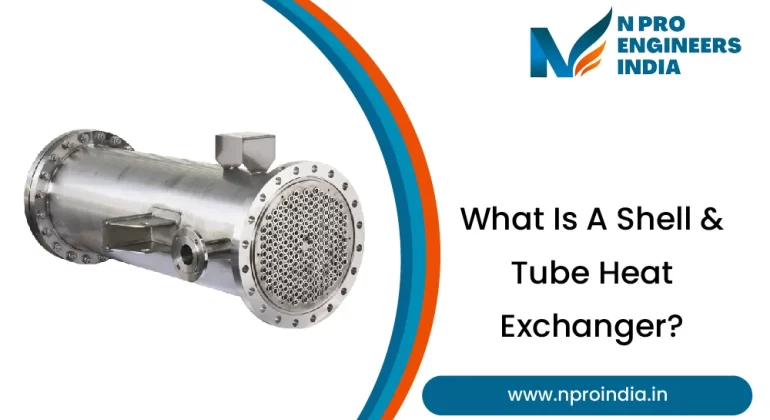
Shell-and-tube heat exchangers are robust devices designed to transfer heat between two fluids, typically a hot fluid and a cold fluid. The exchanger consists of a shell (a large cylindrical vessel) and tubes (smaller tubes enclosed within the shell). The hot fluid flows through the tubes, while the cold fluid circulates around the tubes within the shell.
Working Principles
The working principle of a shell-and-tube heat exchanger revolves around the concept of heat transfer through conduction. As the hot fluid passes through the tubes, it transfers its heat energy to the tube walls. This heat is then conducted through the tube walls to the colder fluid flowing around the tubes, facilitating efficient heat exchange.
Applications
Shell-and-tube heat exchangers find extensive applications across various industries. They are commonly used in power plants, chemical processing plants, oil refineries, HVAC systems, and many other industrial processes. These exchangers are particularly effective in applications requiring high-pressure and high-temperature operations.
Advantages of Shell-and-Tube Heat Exchangers
Shell-and-tube heat exchangers offer several advantages over other types of heat exchangers. Firstly, their robust design allows them to withstand high pressures and temperatures, making them suitable for demanding industrial processes. Additionally, they provide excellent heat transfer efficiency, ensuring optimal performance. Moreover, their modular design allows for easy maintenance, repair, and cleaning.
Considerations and Limitations
While shell-and-tube heat exchangers offer numerous benefits, certain considerations should be taken into account. Factors such as pressure drop, fouling, material selection, and size limitations need to be carefully evaluated during the design and selection process. Additionally, the complexity of their construction may result in higher initial costs compared to other heat exchanger types.
Conclusion:
Shell-and-tube heat exchangers are an indispensable component in various industries, facilitating efficient heat transfer between fluids. Their robust design, high-pressure and high-temperature capabilities, and excellent heat transfer efficiency make them a preferred choice for many applications. However, careful consideration of factors such as pressure drop and maintenance requirements is crucial for optimal performance. By understanding the working principles, applications, advantages, and limitations of shell-and-tube heat exchangers, engineers and industry professionals can harness their potential for enhanced heat transfer processes.