
Compressors are essential components in various industries and applications, serving the purpose of increasing the pressure of gases or air for various processes. Understanding the different parts of a compressor and their functions is crucial for maintaining and optimizing its performance. In this comprehensive guide, we will delve into the inner workings of a compressor, exploring its key components and their roles in the compression process.
Introduction to Compressors
Before we dive into the individual components of a compressor, let’s have a brief overview of what a compressor is and its primary function.
A compressor is a mechanical device designed to increase the pressure of a gas or air by reducing its volume. It is widely used in applications ranging from industrial processes, refrigeration, and air conditioning to power generation and automotive systems. Compressors come in various types, including reciprocating, rotary, screw, and centrifugal, each with its unique set of components and advantages.
Common Components of a Compressor
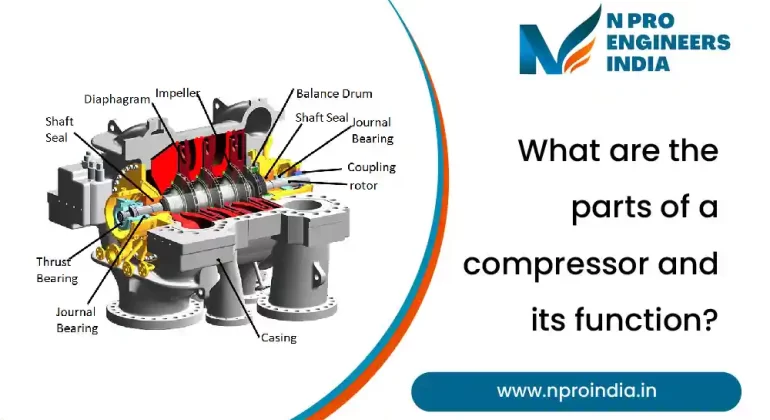
- Compressor Housing or Casing:
– Function: The housing or casing encloses and protects the internal components of the compressor. It also helps maintain a stable temperature inside the compressor to prevent overheating.
- Rotors or Pistons:
– Function: The rotors (in rotary compressors) or pistons (in reciprocating compressors) are responsible for compressing the gas or air. They move back and forth or rotate to reduce the volume of the gas, leading to an increase in pressure.
- Suction and Discharge Valves:
– Function: These valves control the flow of gas or air into and out of the compression chamber. The suction valve allows gas to enter during the suction stroke, while the discharge valve opens during the compression stroke to release compressed gas.
- Cylinder (Reciprocating Compressors) :
– Function: In reciprocating compressors, the cylinder contains the piston and serves as the compression chamber. As the piston moves up and down, it compresses the gas within the cylinder.
- Compression Chamber:
– Function: This is the space where the compression of gas or air occurs. It plays a crucial role in raising the pressure of the working fluid.
- Cooling System:
– Function: To prevent overheating, many compressors are equipped with cooling systems, such as fans or liquid cooling, to dissipate heat generated during compression.
- Oil Lubrication System:
– Function: In some compressors, especially reciprocating ones, an oil lubrication system is employed to reduce friction and wear between moving parts.
- Drive Mechanism:
– Function: The drive mechanism, often an electric motor or an engine, provides the necessary power to operate the compressor. It drives the motion of pistons, rotors, or impellers.
- Pressure Relief Valve:
– Function: This safety valve opens to release excess pressure in the compressor, preventing over-pressurization and potential damage.
Functions of Compressor Components
Now, let’s delve deeper into the functions of these compressor components:
– Compressor Housing or Casing: Provides protection, temperature control, and helps reduce noise generated during compression.
– Rotors or Pistons: Act as the primary compressing elements, creating a pressure difference by changing the volume of gas or air.
– Suction and Discharge Valves: Control the flow of gas into and out of the compression chamber, ensuring efficient compression.
– Cylinder (Reciprocating Compressors) : Houses the piston and serves as the compression chamber where gas is compressed.
– Compression Chamber: Allows for the compression of gas or air, increasing its pressure.
– Cooling System: Prevents overheating by dissipating heat generated during compression.
– Oil Lubrication System: Reduces friction and wear on moving parts, ensuring smooth operation and longevity.
– Drive Mechanism: Provides the power needed to operate the compressor by driving the compressing elements.
– Pressure Relief Valve: Safeguards against over-pressurization, protecting the compressor from damage and ensuring safety.
Conclusion
Compressors are intricate machines with multiple components working harmoniously to increase the pressure of gases or air for various applications. Understanding the functions of compressor components is vital for proper maintenance, troubleshooting, and optimizing the efficiency of these essential devices. Whether you’re dealing with reciprocating, rotary, screw, or centrifugal compressors, a grasp of their inner workings is essential for ensuring their reliability and performance in diverse industrial and commercial settings.